

UKGlobal
25 August 2026
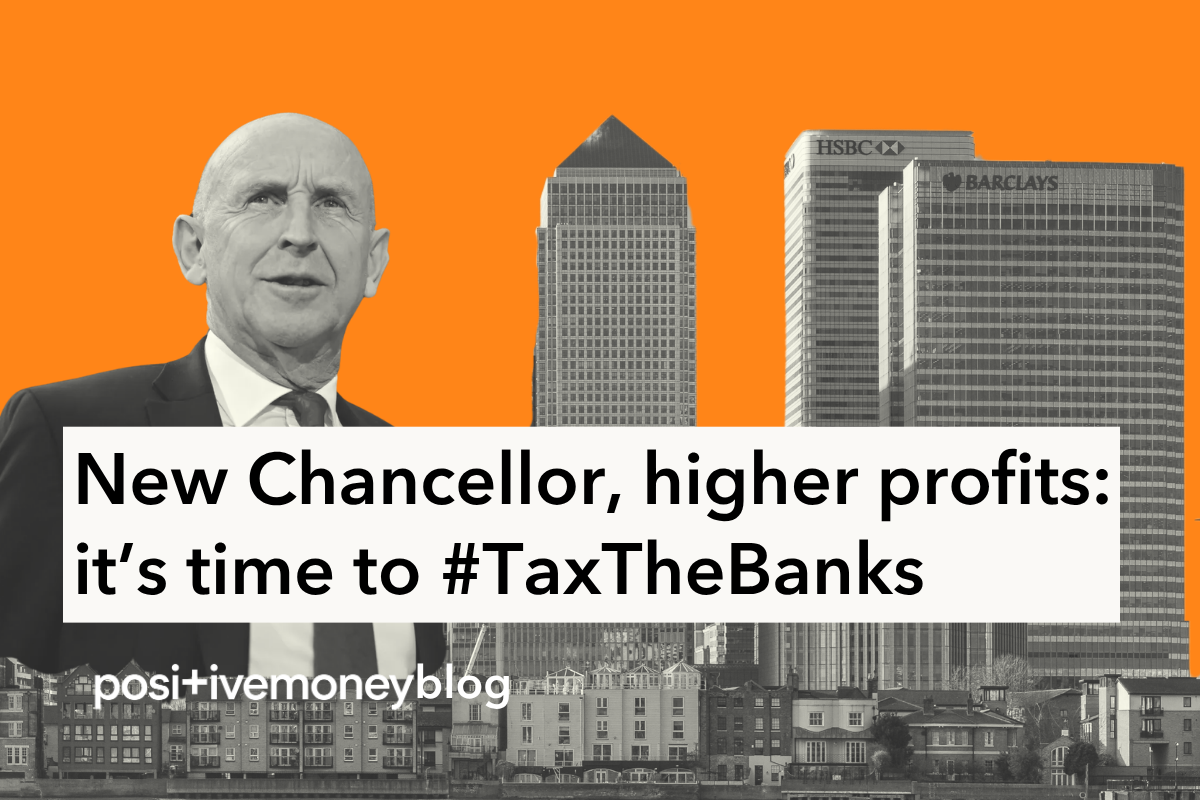
Following record-breaking half yearly profits, new Prime Minister Andy Burnham and Chancellor John Healey have a clear target for their first Budget: banks.
The results are in. After HSBC finished reporting, following Barclays, Lloyds, and Natwest last week, total profits for the UK’s four biggest banks in January - June 2026 came to over £29.2 billion - a 21% increase on the same six months in 2025.
These latest profit announcements mean our proposal for a windfall tax would bring in £19 billion from the UK arms of these four banks alone (and over £20 billion if you add in Santander). Enough to cover Prime Minister Andy Burnham’s cost of living measures for a VAT cut on electricity bills, the £2 bus fare cap, and business rate cuts to pub, club, and music venues, more than 13 times over.
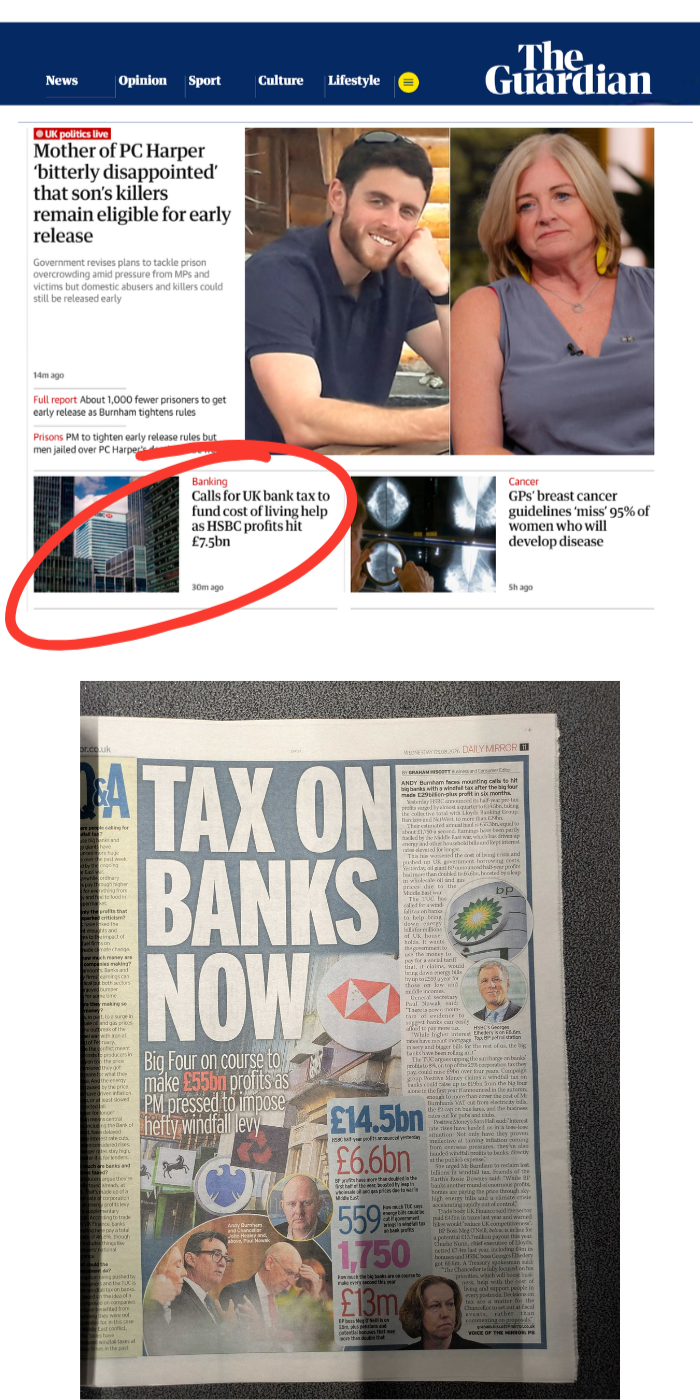
Our new figures have reignited calls to #TaxTheBanks and made a media splash, with headlines and a full-page spread in the Mirror, The Guardian, (twice), at one point featuring as the second story on their website, CityAM, and a piece from The Independent 's chief business commentator James Moore which included the quote: "Credit to Positive Money: it is smarter than the average pressure group. There is clearly some thought behind its proposal, which has garnered a great deal of attention with Healey’s first budget looming." This all sat alongside Sky News’ economics and data editor Ed Conway prediction earlier in the week that a tax on banks is “the most likely thing to happen in a Budget”.
Banks are already divvying up these profits. Almost half has gone to their shareholders through dividends and share buybacks. These profits come on top of the highest bankers' bonuses since the 2008 crisis - back when taxpayers were forced to bail out the banking sector to the tune of billions. The Trades Union Congress (TUC) have estimated that the City paid out an astonishing £25 billion on bonuses in the year to March. This, when combined with the scale of the profits reported after these payouts and the amount funnelled to shareholders, proves banks could easily be paying more.
Especially considering banks have all of us to thank for these record-breaking profits. Following years of higher interest rates, banks have raked them in from customers’ higher debt, rent, and mortgage payments, alongside the Bank of England, which is paying interest on private banks’ large holdings of reserves, a cost ultimately borne by the Treasury - a.k.a us.
Rates are (misguidedly) expected to stay higher for longer given inflationary pressures, so, if banks are going to profit from the cost of living crisis like oil and gas companies, we believe they deserve a windfall tax like them too. That’s why we’re proposing a 38% rate on profits made directly from the UK public - not those from investment banking or global business booked in the UK - partly to assuage concerns that a windfall tax would make the UK’s financial sector less competitive, but also to reflect the real source of these profits. As Diane Abbot MP posted on X; imagine how we could invest them instead.
With Emma Reynolds MP - former managing director of TheCityUK - back in the Treasury, and continuity with Lucy Rigby MP as City Minister, it’s hard to know yet if Andy Burnham’s new government will really make a break with the previous one, and stop cosying up to city lobbyists.
Chancellor John Healey’s first autumn Budget, set for 28th October, will be the first big test to prove whose side this new government is really on. Let’s hope he’s prepared to stand up and succeed where predecessor Rachel Reeves failed, and instead of burdening ordinary households and small businesses, targets the banks instead.
If you haven’t yet, sign the petition to #TaxTheBanks