

Rethinking central bankingEU
21 October 2026
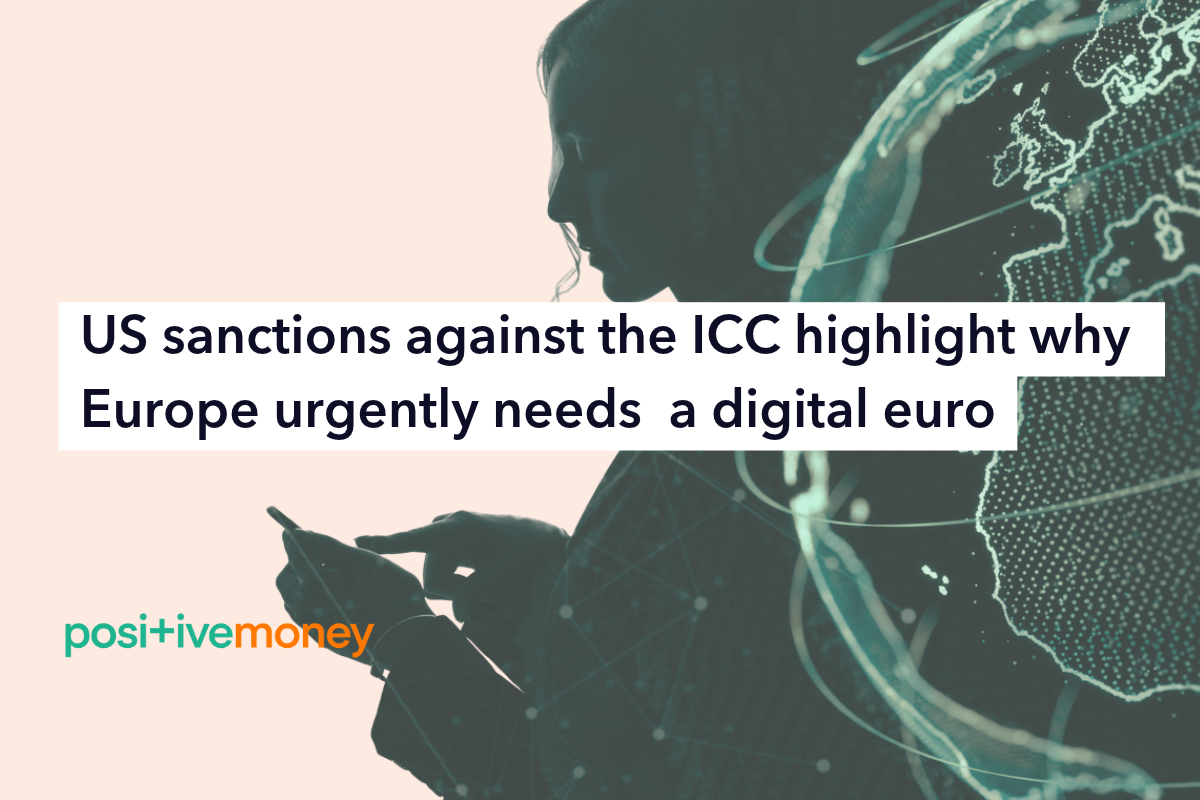
The US government’s decision to impose sanctions on the International Criminal Court (ICC) exposes critical vulnerabilities in Europe’s financial independence. Here’s how foreign political pressure can compromise the European banking infrastructure and why a publicly distributed digital euro is essential for EU strategic autonomy.
The debate in the European Parliament regarding US sanctions against the International Criminal Court underscores a broader systemic weakness: Europe's over-reliance on foreign payment monopolies and financial networks.
When foreign authorities can unilaterally freeze the bank accounts of international human rights organisations operating on European soil, our entire economic infrastructure is shown to be vulnerable. Following the US decision to sanction 17 individuals affiliated with the court and target its assets, European financial institutions find themselves caught in the middle. Major banks like ABN Amro, which manages the ICC’s primary accounts in The Hague, face severe financial penalties from Washington if they continue providing routine banking services.
European commercial banks fear losing access to US markets and so they are routinely compelled to prioritise foreign sanction compliance over EU rules and interests. To maintain a safe and stable economic system, Europe must establish critical public infrastructure that operates completely free from external political pressure.
A safe, publicly backed digital euro serves as a vital tool for safeguarding European financial sovereignty against foreign overreach. With a secure public payment instrument in place, domestic payment systems can never be shut down by foreign powers.
However, the digital euro cannot guarantee true European sovereignty if it relies solely on commercial banks for distribution, as these institutions remain inherently vulnerable to foreign regulatory threats. It’s true that financial independence requires a digital euro backed by guaranteed public distribution as an independent payment instrument. Only through robust public infrastructure can Europe ensure that foreign political decisions will never again jeopardise the operations of people, businesses, or international institutions across the continent.