Back to Resources![image]()
15 September 2026
Financing the green transition: An advocacy toolkit for the renewable energy sector
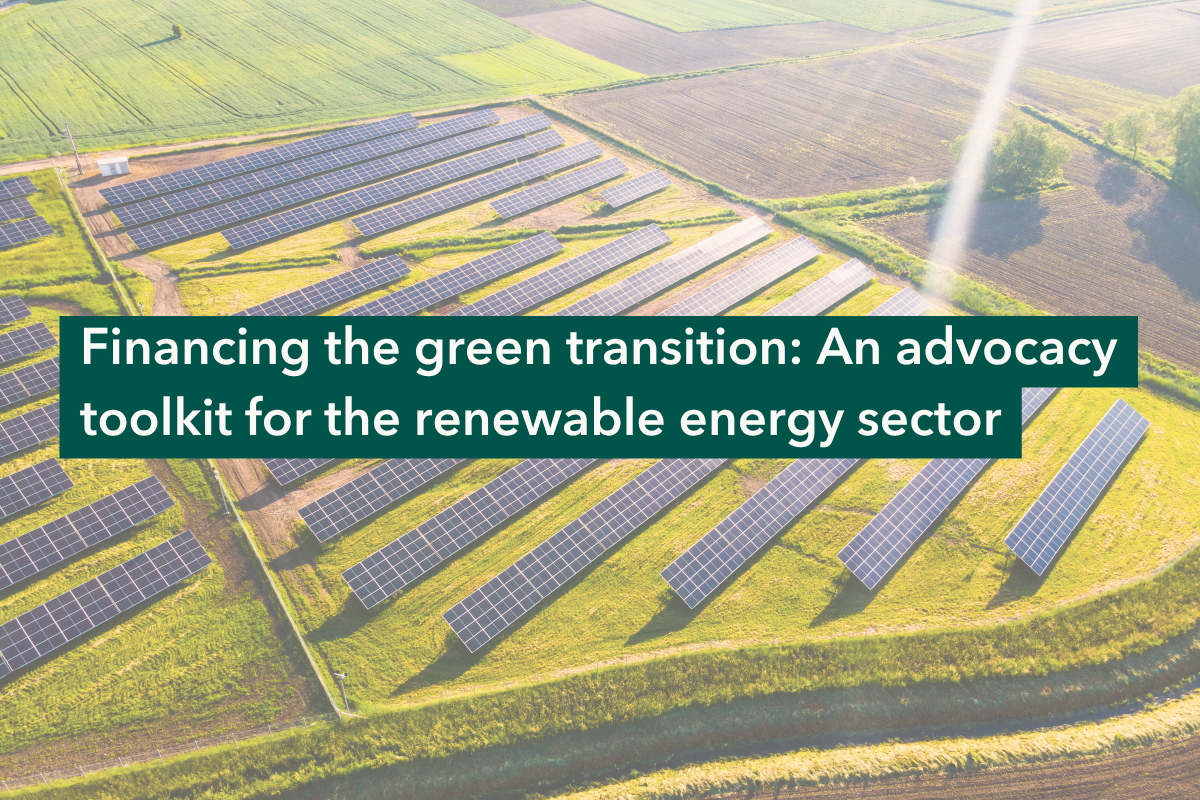
Positive Money Europe has developed a policy and advocacy toolkit to help renewable energy associations engage confidently on financial and monetary policy topics with EU and national policymakers.


About this project
The financial conditions shaping the green transition – from central bank interest rate decisions to EU investment frameworks and energy taxation – have a direct and often underestimated impact on the renewable energy sector. This is why issues such as monetary policy and its coordination with fiscal policies are increasingly crucial topics for the clean energy transition sector.
Positive Money Europe has developed a policy and advocacy toolkit to help renewable energy associations engage confidently on these topics with EU and national policymakers. It brings together policy analysis, concrete advocacy asks, and practical tools – covering monetary policy, green central banking, monetary-fiscal coordination, and energy affordability – all through the lens of what they mean for the renewable energy sector specifically.
The toolkit covers four key areas:
What is monetary policy and why does it matter for the clean energy transition?
ECB interest rate decisions are not neutral for the energy sector: they structurally favour fossil fuels over renewables. Renewable energy projects are capital-intensive and rely heavily on debt financing and so the cost of borrowing matters far more for this sector than for fossil fuels. This brief explains how monetary policy works, why it disproportionately affects renewables, and why engaging on this issue is increasingly important for the industry.
Best for: contacts new to monetary policy; background reading before meetings on energy financing.
Green monetary policy: what the ECB should do differently
The ECB's portfolio and operational choices actively shape the flow of finance in the European economy - and currently disadvantage the clean energy sector. This brief sets out the concrete reforms that the ECB should implement: greening its asset purchases, reforming its collateral framework to reflect climate and biodiversity risk, introducing preferential refinancing rates for green activities, and reforming macroprudential policy to steer bank lending towards the transition.
Best for: meetings with members of the ECON committee; ECB-facing advocacy.
Monetary-fiscal policy coordination
When monetary and fiscal policy pull in opposite directions, both become less effective - and the green transition pays a disproportionate cost. This brief explains why coordination between the ECB and EU fiscal institutions is essential, and sets out what both should do: from national investment in renewables as a price stability tool, to ECB measures that level the playing field for Southern European countries facing higher borrowing costs.
Best for: national government contacts; national central banks; ECB interlocutors; fiscal policy discussions.
Energy affordability as the cornerstone of European competitiveness
EU industrial electricity prices were 158% higher than in the US in 2023. The EU's average energy import deficit between 2022 and 2024 was €463 billion - roughly equivalent to the entire annual investment needed for the green transition. This brief makes the economic sovereignty and competitiveness case for improving financing conditions for renewables: from EIB lending and EU investment funds to energy taxation reform and Contracts for Difference.
Best for: competitiveness and industrial policy contacts; meetings with members of the ITRE committee.
Additional advocacy resources
We have also developed a set of complementary resources to support stakeholders in the renewable energy sector in putting these policy asks into practice - including a mapping of relevant policy actors, tips on how to approach EU policymakers and on shaping conversations.
These resources are available on request: contact us at serena.diluccio@positivemoney.eu to receive the full toolkit.